1891-92
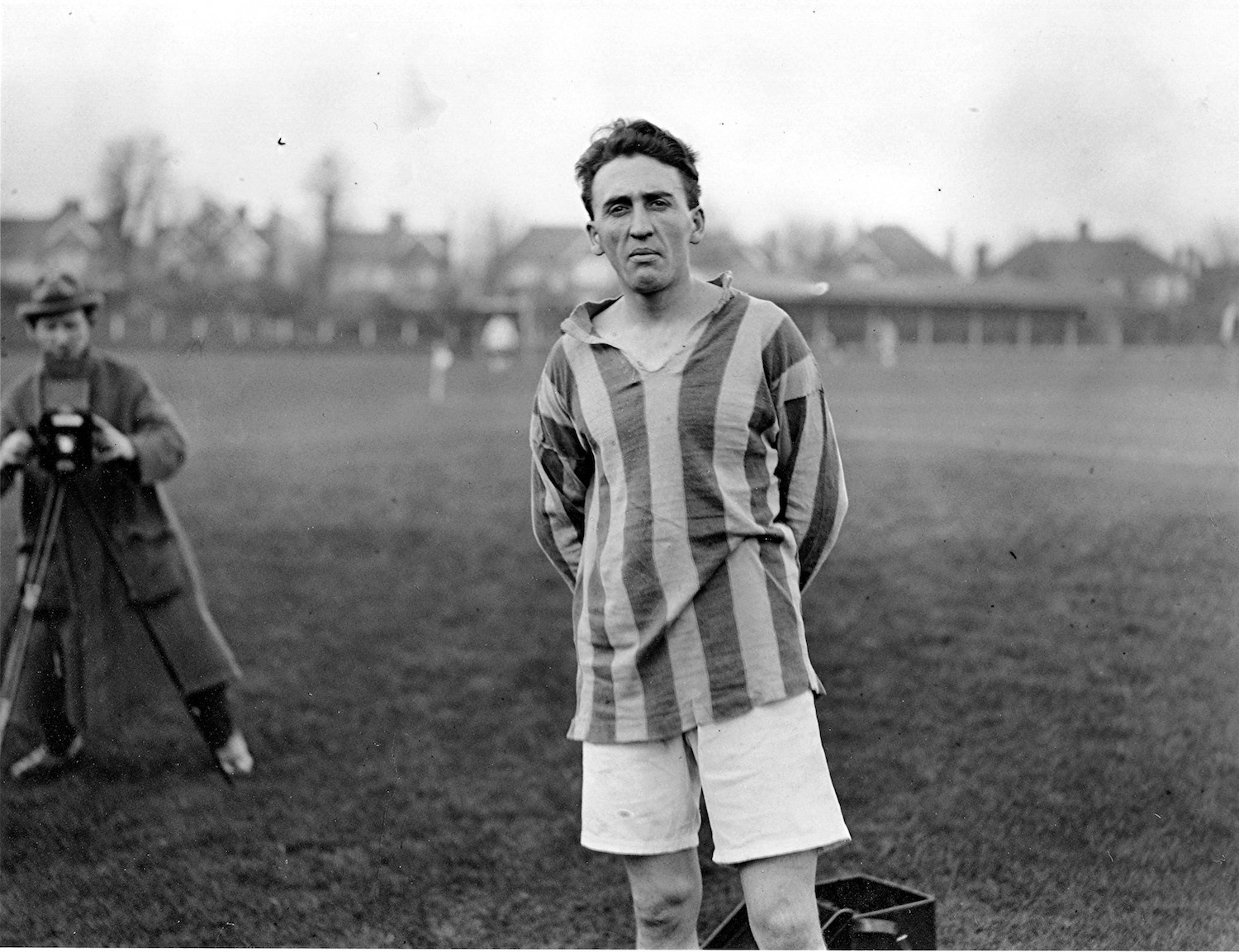
The oldest photo that Peter turned his hand to for colourising was the 1891-92 team photo of the original St Albans. At this time the club was playing its home games at the Grammar School Ground that is better known these days as Belmont Hill, but is now buried under a housing estate.
As with all of the photos in this section Peter has used a bit of artistic licence so, particularly with these much older ones, there may be some variation from the true colours.
The two most colourful characters in the photo have taken centre stage in the middle of the bench. On the left is James William Dickson and, on the right, the magnificently named Sandford Ffolliat Pierpoint Moore. Dickson studied law at Exeter College, Oxford. The colours for which on the crest are gold, black and white, rendering the colours in this photo as possibly unlikely. Prior to going to Oxford Dickson had been a pupil at St Albans Grammar School and it was on their football pitch that he now turned out for St Albans. Sandford Moore, born in Lyme Regis, was a music master at St George’s School, Harpenden, and was a phenomenal goal scorer. He scored a known 96 times for the original club but the actual figure is probably higher due to a number of match reports in which the goal scorers were not noted.
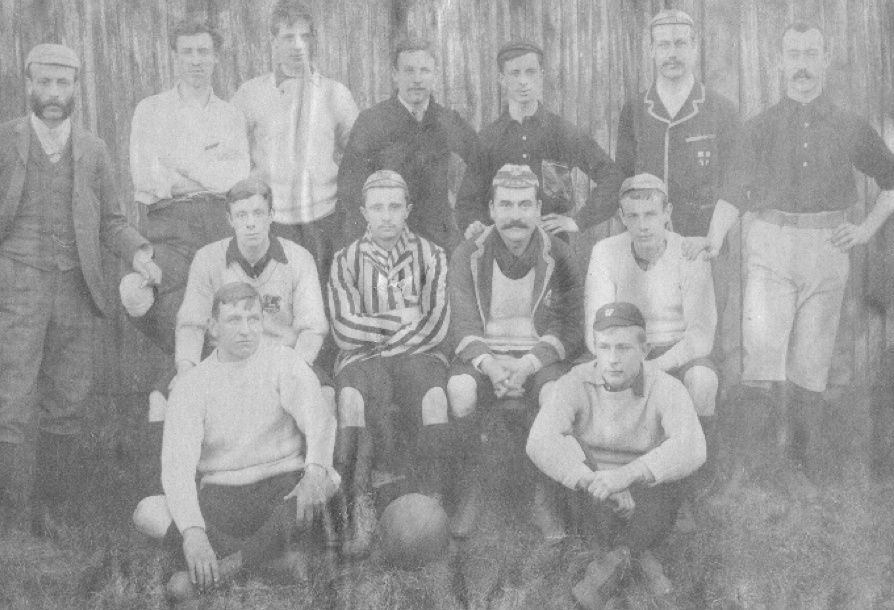

To the left of the middle row is John William Sharpe who has the Stag of Hertfordshire on his jersey. Sharpe had played for the county by this time, as had Moore, Dickson, and the Rev. Charles Bennett. Quite why Bennett has the flag of St George on his breast pocket is unclear. Third from the right in the back row is Ernest Northern Sharpe, he is only player bearing in the flag of St Albans (assuming that Peter has got the colours correct). Nothing has been unearthed thus far to suggest that the football club had the City shield on their kit.
It would seem reasonable to suggest that the photograph was taken at Belmont Hill although it is also possible, though unlikely, that it was taken in the grounds of The Crystal Palace public house that stood in London Road. The landlord of the Crystal Palace is the gentleman to the left of the back row, Fred Gentle. Since its formation in 1881 the club had used the Crystal Palace as its headquarters.